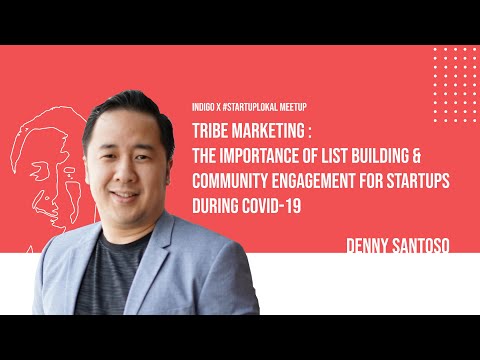
How a Startup Community Began from an Accidental Meetup in Jakarta
In this article
- How did #StartupLokal start?
- Why was a community needed?
- What was the original idea behind Tiket.com?
- Why did they choose the name "tiket.com"?
- What challenges did they face when pitching to investors?
- How did they handle copycats?
- Who can join #StartupLokal?
- What does #StartupLokal aim to achieve?
- Key Takeaways
#StartupLokal began not as a formal initiative but as an accidental gathering of tech professionals in Jakarta. Natali Ardianto, co-founder of Tiket.com and initiator of the community, describes how the group formed organically in 2010 when a small group of people decided to meet again the following month. What started as a casual meetup grew into a monthly event that now hosts over 65 gatherings, bringing together founders, investors, and mentors to share insights on running businesses.
How did #StartupLokal start?
The community began with just 33 people at its first meeting. Natali recalls that one of the attendees, William Wijaya, was unusually quiet during the session. Two weeks later, he was acquired by Yahoo. This early sign of success foreshadowed the impact the group would have. Over time, the attendees became key players in Indonesia's digital economy, proving that consistent, long-term engagement builds real value.
"We just kept meeting every month. We never missed a single one."
The group's persistence was key. Unlike many startups that fade after a few events, #StartupLokal maintained regularity and focus. This consistency created trust and allowed the community to evolve into a platform for meaningful exchange.
Why was a community needed?
Natali observed a gap in the ecosystem: while Indonesian engineers were skilled at building products, they lacked knowledge about running a business. Many founders knew how to code but not how to pitch to investors, manage finances, or scale operations.
"People in Indonesia are great at building products, but they don't know how to run a company."
#StartupLokal was created to fill that gap. Instead of focusing on technical skills like programming languages, the community prioritized business fundamentals, how to structure a company, negotiate with investors, and grow sustainably. Sessions featured experienced mentors who shared real-world lessons, not just theory.
Join #StartupLokal
The community has been meeting in Jakarta since April 2010. Registering is free and takes a minute.
What was the original idea behind Tiket.com?
Tiket.com's domain was registered as early as 2007, but the company wasn't launched until 2011. Natali explains that the idea came from a recognition of a growing digital opportunity in Indonesia. At the time, platforms like Agoda and Booking.com were already dominant in the global market, but they hadn't fully penetrated the Indonesian market.
"We were entering what I call digital colonization 2.0."
She used the term to describe how foreign digital services were capturing Indonesia's online spending, with revenue flowing out of the country. The idea was to build a local alternative that could capture value within Indonesia's digital economy.
Why did they choose the name "tiket.com"?
The name was chosen not just for its simplicity but for its strategic foresight. The domain was expensive at the time, tens of thousands of dollars, yet the team bought it early, recognizing that short, memorable names would be valuable as online commerce grew.
"Tiket.com is easy to remember. If someone types 'tiket pesawat,' the site comes up."
This small decision had long-term benefits. It made the brand instantly recognizable and gave them a competitive advantage in user acquisition. The name was a deliberate act of long-term thinking.
What challenges did they face when pitching to investors?
In 2011, the team visited 15 investors in Indonesia. Most were skeptical. They were told that the market wasn't ready, and that foreign players already had a strong foothold. The response was often dismissive: "Why would we build another travel booking site when there are already big players?"
"They didn't see the potential. But we did."
The team persisted. Their belief in Indonesia's digital future was rooted in a simple idea: what major countries did 5 to 10 years ago, Indonesia should do now. This mindset allowed them to act early, before the market fully developed.
Know when the next one is
Meetups are announced in the WhatsApp group.
How did they handle copycats?
After Tiket.com launched, several investors who had initially rejected the idea began building similar platforms. Natali saw this not as a threat but as validation.
"If they copied us, it means we were right."
She emphasized that ideas alone are not valuable. Execution is what matters. The real advantage came from being first, learning quickly, and adapting to local needs. The team focused on being deeply operational, profitable, corporate, and business-oriented from day one.
Who can join #StartupLokal?
The community is open to anyone involved in or interested in startups. There are no strict criteria, but the focus is on people who want to grow their business knowledge. Attendees include founders, developers, designers, and even non-technical professionals who want to understand how startups operate.
The goal is not to teach coding or design but to build practical business skills. Sessions cover topics like fundraising, financial modeling, investor relations, and company structure.
What does #StartupLokal aim to achieve?
The long-term vision is to strengthen Indonesia's startup ecosystem by creating a culture of continuous learning and collaboration. The community doesn't just host events, it builds relationships, trust, and shared understanding.
"We're not here to teach programming. We're here to make people more business-oriented."
The success of #StartupLokal is measured not by the number of startups it incubates, but by the number of founders who leave each meeting with a clearer understanding of how to run a business. One of its incubated companies, Telunjuk.com, raised venture capital from Japan, proving the model works.
Key Takeaways
- #StartupLokal began as an unplanned meetup of 33 people in 2010 and grew into a regular monthly event.
- The community focuses on business fundamentals, not technical skills, to help founders run sustainable companies.
- Tiket.com's early domain purchase in 2007 was a strategic move to secure a valuable, memorable brand.
- Early investor skepticism was common, but the team persisted based on long-term vision.
- Copycats are a sign of validation, not risk, execution matters more than ideas.