How List Building and Community Engagement Outperform Paid Traffic for Early Startups
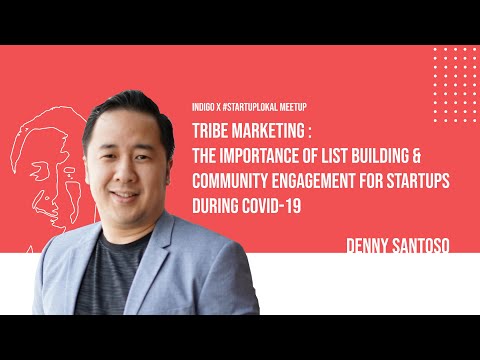
Written up from #StartupLokal Meetup v.102: Tribe Marketing: The Importance of List Building and Community engagement

In this article
- Why Startups Fail When They Chase Traffic Instead of Building a List
- The product-first mindset that sinks new founders
- What owned audience changes
- How to Pick a Profitable Niche That Can Pay
- Look for where money already moves
- Example of a doctor and a mother with autoimmune
- What a Lead Magnet Is and How to Make One People Trade Data For
- Free value exchanged for contact
- Examples from the talk
- How to Nurture an Audience Through Email Instead of Ads
- The step-by-step path from attention to referral
- Using email list to sell apartments and courses
- Why Referral Beats Advertising Once You Have a Community
- Moving budget from ads to commissions
- Case of the Lego reseller community
- How to Take Action Faster Than Your Competitors
- Seven-day launch example
- Testing content with real audience
- Key Takeaways
Building a list of owned contacts and a community around a specific niche outperforms chasing arbitrary traffic for startup marketing. Deni Santoso, who led the Tribe Marketing session at the #StartupLokal meetup, shows that an owned audience lets a founder sell repeatedly without paying platforms for each reach.
Why Startups Fail When They Chase Traffic Instead of Building a List
Santoso opens by naming the habit that kills early ventures: they build a product, then wonder how to get customers. The founder starts with "I have this idea, I will make this product," and only later asks how to market it.
The biggest mistake of beginner entrepreneurs is they have a product mindset. They say, "I want to make this product," and then they struggle to find buyers.
He explains that the reverse is safer. You identify a group that already spends money and feels a pain, then you serve them. A community you own. An email list, a WhatsApp group, a closed circle, is an asset no algorithm can take away.
The product-first mindset that sinks new founders
The transcript captures several examples of founders who began with inventory instead of audience. One founder built a physical store, rented a shop, and only then looked for customers. That exposes you to rent and fixed cost before proof of demand.
Santoso argues that online shifts this but many still repeat the error by posting on Instagram and hoping strangers appear. He notes that social platforms keep your reach low unless you pay.
Social media does not give you followers for free. You may have many followers on Instagram or Facebook, but you still cannot reach them without paying.
Thus the owned list is the correction. When you hold the contact data, you can follow up regardless of platform changes.
What owned audience changes
Without the list, each sale restarts from zero. With it, you run a simple machine: capture attention, get contact, educate, offer, deliver, ask for referral.
The framework stays the same. You do not use ads. The ad budget is moved to referral. If you invite others, you get commission.
The speaker adds that many startups fail because they focus only on front-end product sales and ignore the back-end relationship. Building a tribe fixes that.
How to Pick a Profitable Niche That Can Pay
Selection of niche must be practical, not based on passion alone. Santoso says you must know the audience's real need before creating anything.
You must know your audience. What do they need? If you do not know, you will only be able to name the mistake.
He gives the example of a young parent market: someone selling insurance for new parents, or parenting classes for babies. The buyer already exists; the job is to match offer to life stage.
Look for where money already moves
The talk points to markets where transaction is habitual. Property, training, financial consulting, even cat content can monetize because the audience already spends on the topic.
You can sell training, you can sell property, you can sell services. A trader can do this. A person selling apartments can do this.
He cites a case from 2014 where apartment units were sold using an email list of 200,000 contacts, combined with offline dinners. The point is not the channel but that the list enabled direct offer without ad spend.
Example of a doctor and a mother with autoimmune
A skin doctor in Kalimantan sold cream on Instagram but was overwhelmed when a post went viral. She could not reply to comments or DMs. The speaker uses this to show that traffic without system breaks the founder.
The post went viral, but she could not answer. The comments piled up, the DMs piled up, and she was alone.
Contrast with a housewife near Malang who had autoimmune disease and sold small crafts at 2,000 to 5,000 per transaction, later 10,000 to 15,000. She learned to raise average order value by bundling, not by buying ads.
Join #StartupLokal
The community has been meeting in Jakarta since April 2010. Registering is free and takes a minute.
What a Lead Magnet Is and How to Make One People Trade Data For
A lead magnet is something free given in exchange for customer data. Santoso defines it plainly.
A lead magnet is something you give for free, exchanged with customer data. That is called a lead magnet.
The magnet must be specific to the niche pain and deliver a quick win.
Free value exchanged for contact
He gives a weight-loss example: after selling fat-burner product, the lead magnet was "How do I arrange my eating pattern?" A woman could see half kilo loss in three days just from the magnet, before buying.
The lead magnet is for the small mothers: how to arrange my eating pattern. Within three days they already monitor half a kilo, then continue.
That demonstrates quick win before pitch. The magnet already gave result, so the paid offer is easier to accept.
Examples from the talk
Other magnets shown: "The Little Black Book" with a secret key, asking email to find out. A curiosity piece: "Why are you not a billionaire?" offered free if email given.
We are made very curious. It is given free, if you enter your email. You read this and think, "I am not a billionaire either," and you enter.
App-based magnets: Gojek or Shopee giving new-user promo for download. Discount 20% or 50% for app install. The principle scales from simple PDF to full application.
How to Nurture an Audience Through Email Instead of Ads
After capture, the founder follows up with email marketing. Santoso notes that even if social media hides you, email lands in inbox.
People click email, we follow up with email marketing system. They may read in detail, they still can, even if they rely on social media.
He warns that Facebook custom audience still needs the email or phone; the owned data remains backbone.
The step-by-step path from attention to referral
The framework described in the talk runs in order:
- Capture interest with image or headline while they scroll.
- Get their contact via lead magnet.
- Educate the prospect with series or content.
- Offer the product or service.
- Deliver and ensure satisfaction.
- Ask for referral and give commission.
The framework stays the same. You do not use ads. The ad budget is moved to referral. If you invite others, you get commission.
Using email list to sell apartments and courses
The speaker recounts using 200,000 email list to sell apartments, sending news about fuel price rise pushing people to property. He also built a premium email marketing class in Indonesia that reached 13 million people, showing the list scales from local to national.
I had 200,000 email list at that time. I sent story to audience, registered to me, about project in Alam Sutera being built.
He stresses combining online list with offline dinner presentation for high-ticket items.
Know when the next one is
Meetups are announced in the WhatsApp group.
Why Referral Beats Advertising Once You Have a Community
Santoso argues that a tribe will sell for you. He shows a Lego reseller case: a woman sold assembled Lego, then taught others to resell, gaining 1,600 resellers in four months, lifting monthly profit from 15 million to 60-90 million.
In four months she had 1,600 resellers. Profit jumped from 15 million a month to around 60 to 90 million.
That happened because the community bought repeatedly and recruited.
Moving budget from ads to commissions
Instead of paying platforms, pay your members to bring friends. The speaker says the marketing machine is same as MLM structure but legitimate: capture, educate, offer, refer.
Marketing is actually the same as MLM that is usually criticized. Whatever it is, the process is like this.
Case of the Lego reseller community
The mother with crafts used bundling to raise transaction value, not ads. The Lego case shows frequency: buyers become sellers, money cycles inside tribe. This is the proof that owned audience compounds.
How to Take Action Faster Than Your Competitors
A core claim: speed of action beats perfection. Santoso launched essential oil brand in seven days from factory to packaging.
From procurement, factory, production, bottle, logo design, packaging, all in seven days. That is action, not just talk.
He tells founders to test copy on Instagram, watch what sticks, iterate.
Seven-day launch example
The essential oil case shows that waiting for ideal blocks growth. He posts rough, not polished, to learn.
My Instagram is messy, but when I find what is good I advertise it. That is the process, not made beautiful first.
Testing content with real audience
He advises stealing from magazines: take a topic magazine cover, replicate the copy skill. For cat niche, buy magazine about cats to get content ideas free.
You want cat content? Look for magazine about that topic. People outside will complain about spending money for magazine, but you get content.
The speaker also pushes founders to force themselves out of comfort zone by listing 3-5 business opportunities, then acting within a week. Mentor community helps those unused to spotting chance.
Key Takeaways
- Own a list and community before building product to avoid paying for reach each time.
- Pick a niche where money already moves and map the buyer's step-by-step decision.
- A lead magnet is free specific value exchanged for email or phone; quick win builds trust.
- Nurture via email, then shift ad budget to referral commissions inside the tribe.
- Act in days, not months; test public content and iterate from real response.