How a Woman in Tech Built a 20-Year Legacy from Her Grandmother's Inspiration
Written up from #StartupLokal Meetup v.64: Kartini in Indonesia Digital Industry

In this article
- What It Means to Be a Serial Tech Entrepreneur in Indonesia
- Why 1996 Matters for Indonesian Tech
- How Her Grandmother Shaped Her Mindset
- The Real Meaning of Being a Woman in Tech
- The Shift from Founder to Mentor
- Why She Chose to Speak Alone at the Meetup
- The Power of Showing Up
- What Women in Tech Can Learn from Her
- Key Takeaways
What It Means to Be a Serial Tech Entrepreneur in Indonesia
Shinta Dhanuwardoyo began building tech startups in 1996, before Google, Yahoo, or Facebook existed. She calls herself a serial tech entrepreneur because she has launched multiple ventures over 20 years. Her first company was founded when the internet was still a novelty in Indonesia. At that time, most people saw technology as a foreign concept. But Shinta saw it as a tool for change.
She didn't start with a plan to become a founder. She started with curiosity. She wanted to know how computers worked. She wanted to build something. That drive led her to create her first startup, long before the term "startup" became common in Indonesia.
Her journey wasn't linear. She didn't succeed every time. But each failure taught her something. She learned how to pivot, how to listen to users, and how to keep going when no one believed in her idea.
"Sebetulnya antara tahun 1996 sampai sekarang ini, kesannya tuh saya banyak sudah melakukan yang kedengarannya sukses ya, cuman sebetulnya yang yang enggak sukses pun banyak sekali."
She didn't hide her failures. Instead, she shared them. Because she knew that real progress comes not from pretending everything is perfect, but from showing the messy middle.
Why 1996 Matters for Indonesian Tech
Starting in 1996 meant Shinta was one of the first people in Indonesia to treat technology as a business opportunity. Most people still saw computers as tools for offices or schools. She saw them as platforms for innovation.
She didn't have access to venture capital. She didn't have mentors. She didn't even have a clear path. But she had one thing: the belief that she could build something new.
That belief became her foundation. It carried her through years when the internet was slow, when investors didn't understand her vision, and when even her family questioned whether she was wasting her time.
Join #StartupLokal
The community has been meeting in Jakarta since April 2010. Registering is free and takes a minute.
How Her Grandmother Shaped Her Mindset
Shinta's most powerful influence wasn't a business leader. It was her grandmother, Ibu Supeni.
"She's my inspiration and she happens to be my grandmother. Ada yang pernah tahu Ibu Supeni?"
Ibu Supeni was a diplomat during President Sukarno's era. She served as an ambassador, including a special envoy to the United States. Her image appeared in newspapers and magazines. Shinta grew up surrounded by stories of her grandmother's courage, intelligence, and independence.
She kept old newspapers, clipped articles, and saved books. Shinta didn't just admire her. She studied her. She saw a woman who broke barriers in a time when few women held public roles.
"That was my first investment di Nusantara Ventures ya."
She said this with a smile. But the meaning was clear: her grandmother's life was her first lesson in leadership. It taught her that women can lead, that they can represent their country, and that they can shape history.
The Real Meaning of Being a Woman in Tech
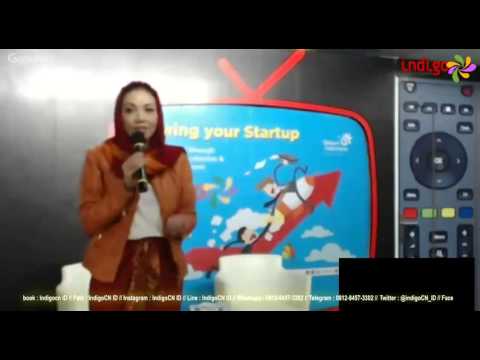
At the 2016 #StartupLokal meetup, Shinta spoke during a special event honoring Kartini Day. She didn't frame her talk as a success story. She framed it as a legacy.
She told the audience, including many young women, that they didn't need permission to lead.
"I'm not selling anything, I'm selling you. I want you to remember, especially if you're a woman. Remember that we created the trends. Of course, technology created the trends also, but without us, it would not be the same trends."
She wasn't talking about coding or apps. She was talking about vision. About courage. About the power to shape what comes next.
She reminded women in the room that they are not behind. They are not late. They are not exceptions. They are the originators.
The Shift from Founder to Mentor
Today, Shinta is no longer just a founder. She's an angel investor and mentor to startups. She supports early-stage companies, especially those led by women.
She doesn't just write checks. She shows up. She shares her network. She helps founders avoid the mistakes she made.
She once wanted to invest in Natalia Riantoyo's startup. Natalia said no. But Shinta didn't stop. She mentored Natalia and her team anyway.
"I did a lot of mentoring for Natali and his team, am I right?"
That moment shows her philosophy: support comes in many forms. You don't need to be the investor to be valuable. You can be the guide, the listener, the person who says, "I've been there. Let me help you go faster."
Know when the next one is
Meetups are announced in the WhatsApp group.
Why She Chose to Speak Alone at the Meetup
Nunik Tirtasari, founder of Sara Local, made a deliberate choice. Instead of a panel, she invited Shinta to speak alone.
"Karena aku pikir Bu Sinta banyak banget yang bisa digali dari Bu Sinta ini pengalamannya itu."
She knew Shinta's story was too rich for a group discussion. Her journey spanned two decades. She had seen every phase of Indonesia's digital evolution. She had failed. She had succeeded. She had built teams. She had lost teams.
The room wasn't there to hear a polished pitch. It was there to hear a woman who had lived the struggle.
The Power of Showing Up
Shinta arrived at the event at 7:30 PM. She had just landed at 1:00 AM. She was jet-lagged. Her voice was tired. But she stood on stage anyway.
She didn't apologize for being tired. She didn't say, "I'm not at my best today." She said, "Let's do this anyway."
That's the lesson she left behind. Not just about building startups. But about showing up, especially when it's hard.
She didn't need to be perfect. She just needed to be present.
What Women in Tech Can Learn from Her
- You don't need to be the first. You just need to be the next.
- Your past doesn't define your future. Your grandmother's legacy can be your fuel.
- Failure is not a dead end. It's a data point.
- You don't have to be the founder to lead. You can be the mentor, the investor, the voice.
- The best way to change the system is to live it.
"So, from IBM, my name is Pandu. You can find me at mbapandu.com, seriously."
She laughed at the end. But the message was clear: everyone has a role. Even if you're not on stage, even if you're not a founder, even if you're just starting.
The revolution isn't just for the ones with the biggest ideas. It's for the ones who keep showing up.
Key Takeaways
- Shinta Dhanuwardoyo has been building tech startups since 1996, long before the term "startup" became common in Indonesia.
- Her grandmother, Ibu Supeni, was a diplomat and a major source of inspiration, teaching her that women can lead and shape history.
- She openly shares her failures, emphasizing that success comes from persistence, not perfection.
- She now mentors startups and invests in early-stage ventures, especially those led by women.
- Her message to women in tech: you are not behind. You are not late. You are the ones who create the trends.